2026 Tariff Volatility and Longer Transit Times: What They Mean for Your Freight Plan
If your last few freight quotes have looked less predictable than usual, that is not a pricing error on anyone’s part — it reflects two real conditions in the 2026 freight market: tariff-driven rate volatility and longer transit times on several major ocean lanes [1][2]. This piece walks through what is actually happening, how to read a freight quote so tariff and weight surprises do not catch you late in a shipment, and what to ask your freight and customs partner before you commit to a date.
What changed in 2026
Two conditions are shaping ocean freight planning this year. First, years of heavy vessel ordering mean fleet capacity has been outpacing demand on several major trades, which is pushing rates down in a broad sense — even as Red Sea diversions and chokepoints create local tightness and longer transit times on specific lanes at the same time [1][3]. Second, new vessel deliveries are expected to slow in 2026 compared with 2025, which may ease some of that oversupply pressure later in the year, but the near-term picture is still one of route-by-route variation rather than a single market-wide direction [1]. Together, that means less predictability in the system to absorb a sudden rate swing.
Why freight costs are harder to predict this year
Tariffs are the biggest single source of unpredictability. U.S. tariffs on some origin countries are suppressing export volumes on the lanes they affect and limiting carriers’ ability to push rate increases through — the opposite of what a simple “tariffs raise prices” intuition would suggest [2]. That kind of route-specific tariff exposure means a cost advantage from a new supplier or origin country can look different once the tariff picture for that specific product and origin is factored in — this needs a product-by-product check, not a general assumption.
Unverified in place: a figure describing an 84% year-over-year rate increase on some routes appeared in only one of the sources reviewed for this piece and could not be cross-checked against a second independent publisher at the time of writing. It is not repeated here as an established market-wide figure — it is flagged only as a reported data point worth confirming directly with a freight provider for your specific lane.
Why transit times are longer on some lanes
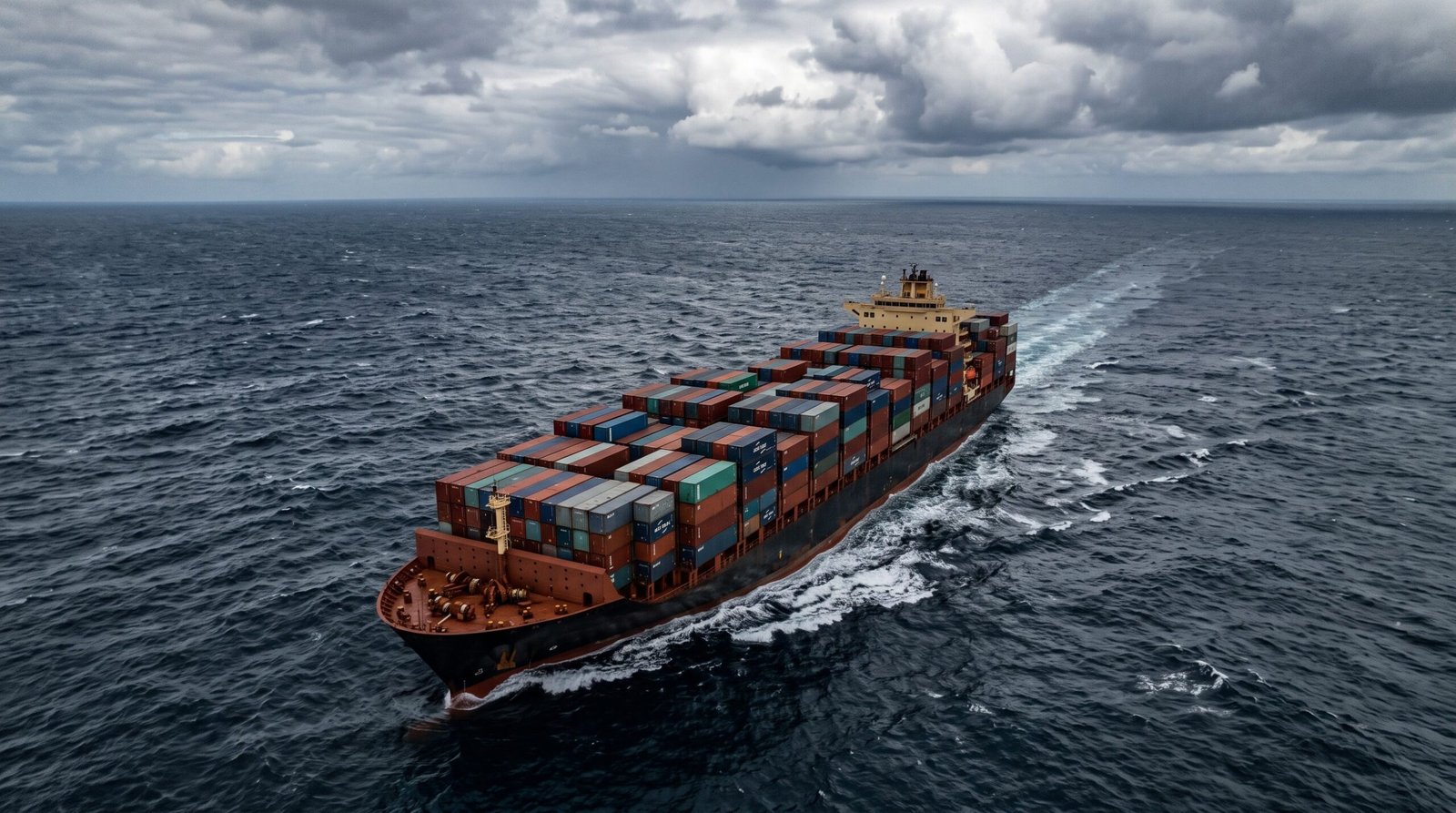
Separately from pricing, physical routing has changed. Alternative routings around the Red Sea and Suez — diverting via the Cape of Good Hope — are adding extra transit days and fuel costs on Asia-Europe ocean lanes and changing the economics of those specific lanes [3]. That is a scheduling problem as much as a cost problem: a shipment that used to have a comfortable buffer built into a project timeline may now have less room than planned. European shippers in particular are reported to be building additional buffer time into their supply chain planning in response to port congestion and routing disruption [2].
Reading a freight quote: chargeable weight, in plain terms

One detail that causes real confusion on freight quotes is “chargeable weight.” For ocean freight, carriers price a shipment at whichever is greater: its actual (gross) weight, or its volumetric weight, calculated from its dimensions. The standard ocean-freight convention treats 1 cubic meter (CBM) as equivalent to 1,000 kg for this comparison [4]. So a large but light shipment — think bulky, low-density cargo — can be charged by volume rather than by scale weight, even though it “feels” light. This is different from air freight, which uses its own, different volumetric divisor (1 CBM = 167 kg) — the two are not interchangeable, and a quote that mixes them up is worth querying [4].
Practically: before you accept a quote, check whether the chargeable weight quoted is based on actual weight or volumetric weight, and ask your provider to show the calculation. On bulky, low-density goods, this single figure can change the shipment’s cost more than a modest rate swing will.
What a buyer should do about it
None of the conditions above are reasons to panic, but they are reasons to plan differently than in a calmer freight year:
- Build in a schedule buffer. If your lane touches Asia-Europe routing, plan for extra transit days from Red Sea/Suez rerouting rather than assuming the old timeline still holds — ask your provider for the current day count on your specific lane, since it varies by route and changes over time [3].
- Ask about tariff exposure before you commit to sourcing. A cost advantage from a new supplier or origin country can be partly or fully offset by tariff exposure on that origin — this needs a product-by-product check, not a general assumption [2].
- Confirm the weight basis of every quote. Ask whether you are being quoted on actual or volumetric (chargeable) weight, and under which convention, before comparing quotes from different providers [4].
- Re-quote closer to your shipment date on volatile lanes. Given the route-by-route rate variation described above, a quote taken weeks in advance may not hold; this is a volatile-fact caveat, not a guarantee either way [1].
None of these steps requires guessing — they are questions any freight and customs brokerage partner should be able to answer directly for your specific shipment.
Planning a shipment in this environment
If you are weighing a shipment in the current market, working through these questions with your freight and customs broker before you commit to a booking date is the most reliable way to avoid a late surprise on cost or timing. Arsham Logistic handles freight transport and customs brokerage for shipments to other destinations; if you have a shipment you are planning, Arsham Logistic’s team can walk through the tariff and routing questions above for your specific lane and cargo. This is an invitation to ask, not a quoted rate or timeline — those depend on your shipment’s specifics and current conditions.
Sources
1. Freightos, “What 2025 Means for 2026: Ocean and Air Freight Forecast,” accessed 2026-07-31, rechecked 2026-08-10, https://www.freightos.com/freight-resources/what-2025-means-for-2026-ocean-and-air-freight-forecast/ — Evidence class E2.
2. C.H. Robinson, “January 2026 Freight Market Update — Ocean,” accessed 2026-07-31, rechecked 2026-08-10, https://www.chrobinson.com/en-us/resources/insights-and-advisories/north-america-freight-insights/jan-2026-freight-market-update/ocean/ — Evidence class E2.
3. The Loadstar, “Freight and supply chains in 2026: key trends shaping the year ahead,” accessed 2026-07-31, rechecked 2026-08-10, https://theloadstar.com/freight-and-supply-chains-in-2026-key-trends-shaping-the-year-ahead/ — Evidence class E2.
4. marketing-system/sources/industry/ocean-freight-cbm-dimensional-weight.md (Freightos, ShippingSolutions, ship4wd, FreightAmigo — consistent industry convention), accessed 2026-07-30 — Evidence class E2.